My favorite failure
My season as a micro flower farmer

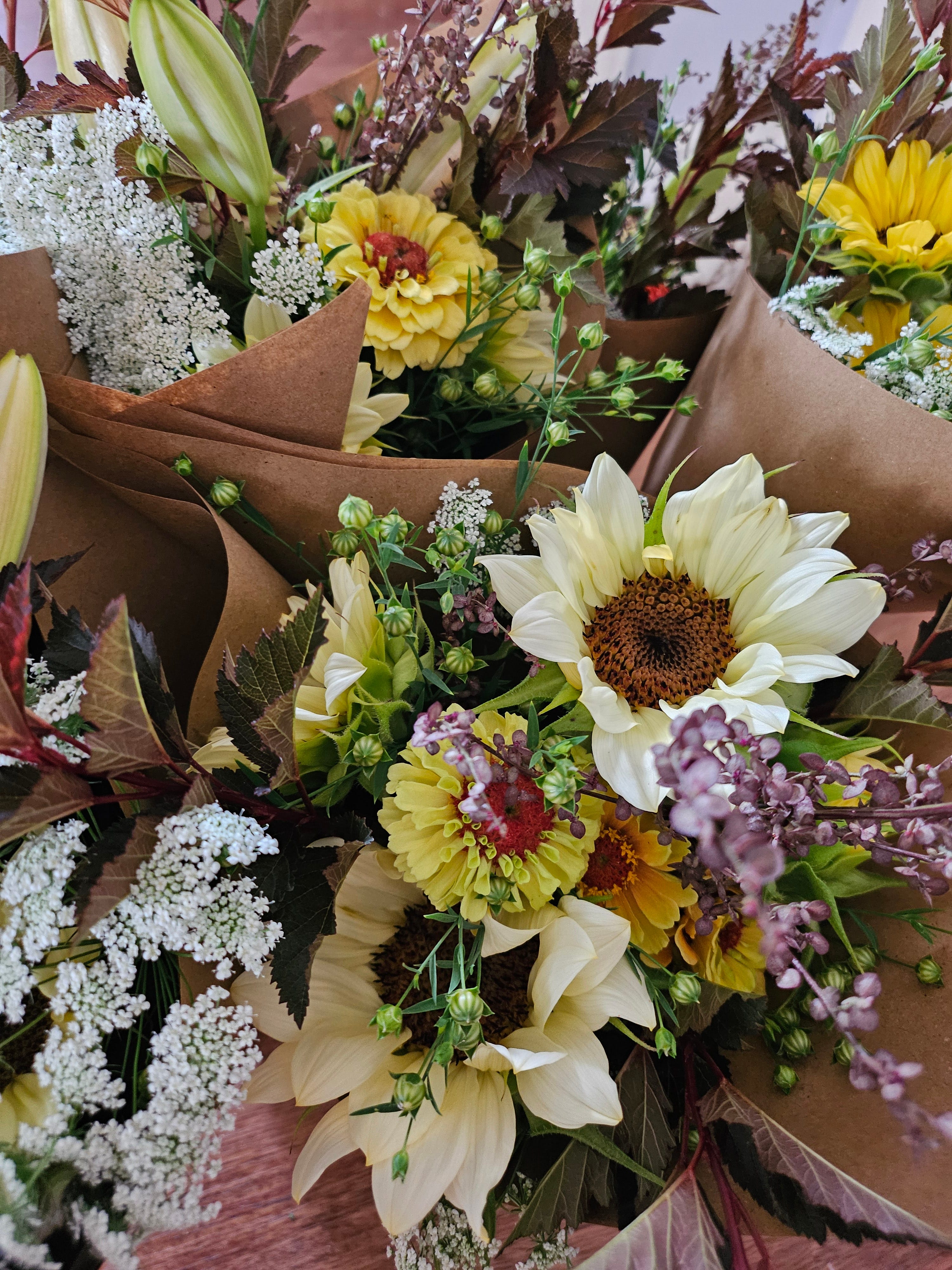
In the spring of 2021 I fell down the flower farming rabbit hole. And when I say “fell” I mean “exploded into a million pieces like a crash test dummy.” Conditions were perfect: I was on maternity leave with my first child and trying to determine the next steps of my career, I was spending lots of time outside enjoying the beautiful spring weather, and I read an article by Erin from Floret.
(For those who don’t know, Erin from Floret is a venerable figure in the flower farming community. She is an amazing, astute entrepreneur who turned the fresh flower industry on its head in the United States. There are many, many contributors to the Slow Flower movement [an offshoot of Slow Food] but she’s possibly the most well-known. She’s also generous beyond belief. Her website is a rich cache of resources for anyone looking to improve their gardening skills, regardless of the growing space you might have. She’s published multiple books, all of them both useful and beautiful, and teaches about everything from seed starting to breeding techniques. She’s a treasure.)
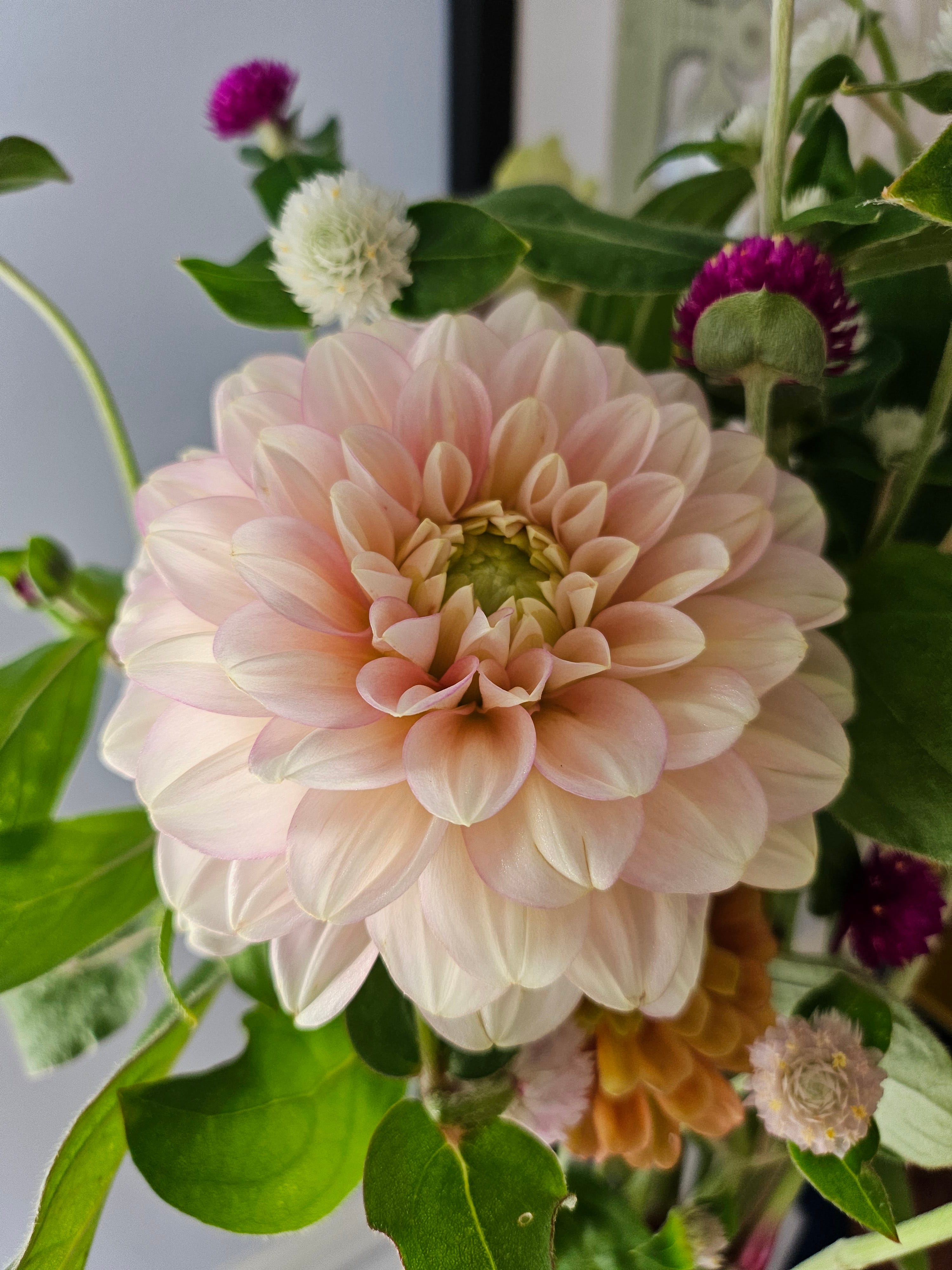
The most intriguing part of the article was the idea of “intensive flower farming.” This method calls for careful planning (variety selection, succession planting, etc.) and if properly executed means you can pack loads of flowers into a small space, refreshing each spot with new plants throughout the season. As soon as a plant is past its peak, boom, it’s gone. Ripped out and replaced with a new little seedling that very same day. Intensive flower farming is ideal for growers who don’t have loads of acreage, so I thought, Hey, I don’t have loads of acreage, I could be a micro flower farmer too.
My husband came aboard very quickly; my pregnancy had fallen during the height of the Covid insanity, which did a number on my mental health, and I think he was just glad to see me excited about a project again. He didn’t bat an eye when I ordered absurd quantities of seed packets and dahlia tubers and seed starting supplies. I’d always been a gardening enthusiast; in high school I once scoured the woods behind my house for bearded iris rhizomes to plant in our flowerbed, and got a nasty case of poison ivy for my trouble, including a Harry Potter-esque itchy red slash from where a leaf must have brushed across my forehead. I didn’t care, though, because I got my irises, and they bloom in my mom’s yard to this day. Plants play a large role in my first novel, Kore’s Field (it’s a retelling of a Greek myth, Admetus and Alecestis, and it pulls in themes from Persephone and Hades), to the point that one negative review on GoodReads said “there was more description of plants than characters,” which stung, but I also found weirdly flattering. The idea of really diving in and trying to make a go of growing flowers professionally lit my fire like few things have ever done.
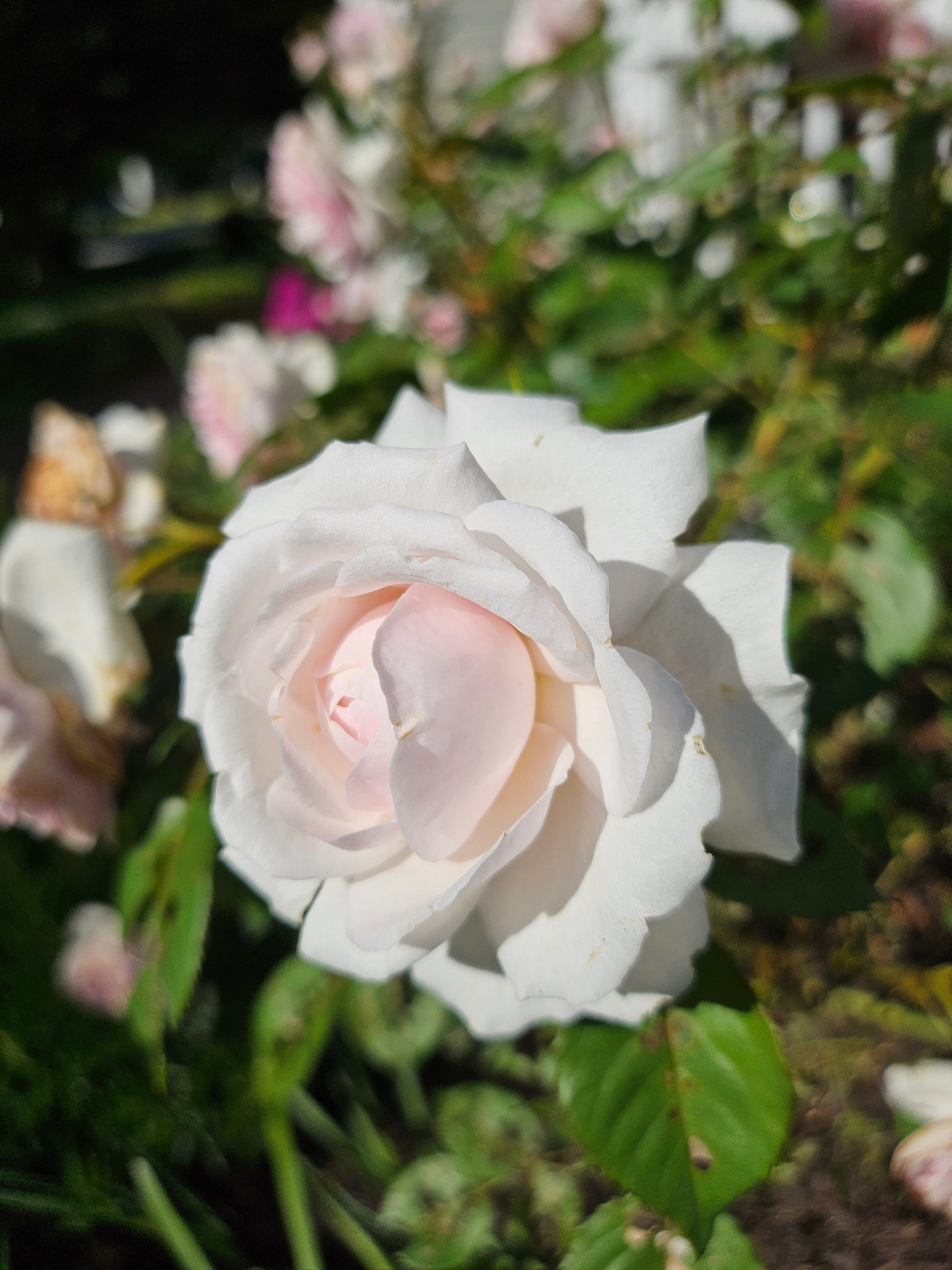
I spent the next four growing seasons refining my skills. I tried dozens of breeds and varieties to determine which ones would fare best in the brutal red clay in my pocket of South Carolina (clay soil is clay soil, no matter how much you amend it, IYKYK). I took copious notes about everything. Successions and harvesting and Japanese beetles and color combinations I loved. I made practice bouquets and learned about shoulder seasons. I bought hydrating solution and needle-nose snips, and experimented with different seed starting mixes. I learned that calendula failed miserably in my garden but atriplex would grow seven feet tall even with pinching. I grew fillers and foliage and learned the importance of a healthy mix of spikes, discs, and air in an arrangement. I filled our back room closet, and later a table in the garage, with vases from thrift stores and harvest buckets. I watched YouTube videos (Nicole from Flower Hill Farm is my favorite, another treasure!) and read blogs from flower farmers in New Mexico, Canada, North Carolina, Nevada, New Jersey, Washington, and Oklahoma. My skills and planting space expanded with each year. All I had to do was point at a sunny patch in our backyard and my husband would cheerfully haul out the rototiller and dig it up. I didn’t want to take up our entire quarter acre yard with my project, so I took care to incorporate plants I could use for my bouquets into our landscape. (For example, when we needed to plant a hedgerow between our house and our neighbor’s new build, I ordered Summer Wine Ninebark and Brandywine Viburnum. Beautiful, and practical!) I was still working full time at my job (and had another baby in the mix) but I pretty much devoted every spare minute outside of work and childcare to the garden. It was a difficult balancing act, but I loved every bit of it.
In summer 2024 I decided I had experimented enough. It was time to pull the trigger and try selling my bouquets. Since we live off a busy road, I decided to try an honor system flower stand. In my research I’d seen it work in other places, and it seemed like an attractive alternative to a farmer’s market. Since it was my first season I wasn’t sure I’d have enough volume for a farmer’s market (spoiler alert: I 100% didn’t). Plus I didn’t love the idea of spending all day, every Saturday, hawking my flowers when I was already working a full 9-5 during the week.
I ordered 450 daffodil bulbs and 750+ tulip bulbs (those sound like big numbers but I assure you they are not) and started prepping for the spring. My grandmother kindly gave us her old refrigerator for our garage and I proceeded to stuff it full of tulip bulbs so they could chill properly before we planted them out. I started hardy annuals and biennials in accordance with my carefully refined schedule, which meant spending many Saturday mornings in January and February mixing buckets of seed starting mix in the backyard with my arm soaking wet and frozen up to my elbow. I obsessively monitored the hardy annuals I was attempting to overwinter, and was pleasantly surprised at how well the sweet peas and Cerinthe performed (tempered by disappointment when the first succession of atriplex was wiped out by a string of nights in the low teens). The neighbors probably thought I was nuts, but I was having so much fun I didn’t care.
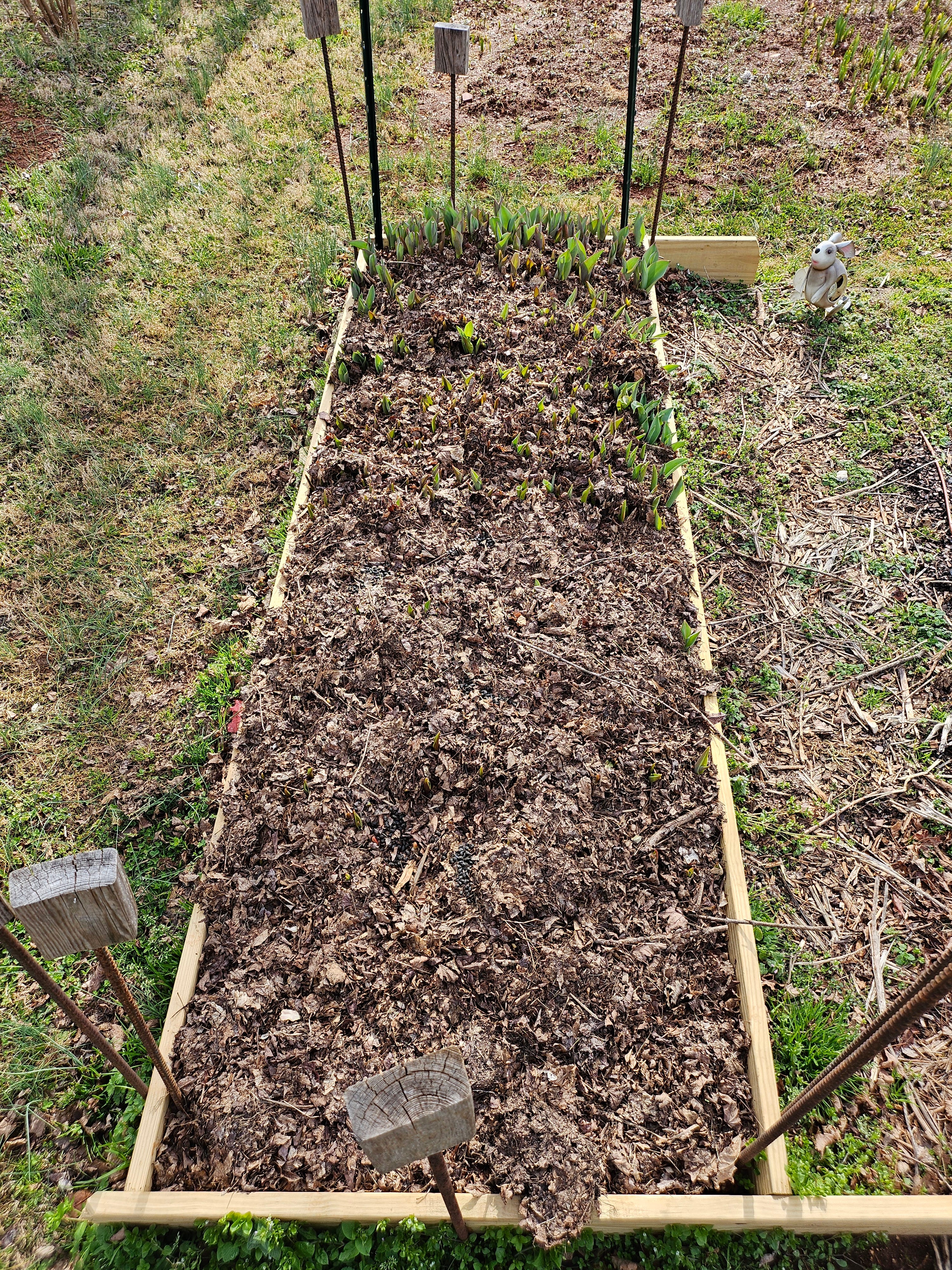
When the first daffodils were ready in mid-March (Fortune and Cum Laude, with a few from a doubles mix) I pulled every goose-neck stem and arranged them in glass milk bottles I’d picked up at Hobby Lobby. I dragged a table out to the front yard and shaded the setup with a patio umbrella, and put out a little collection jar and a sign with my Venmo account info. Then I went grocery shopping. When I got home I spent the whole morning hovering by the window like a crazy person. I got a grand total of two customers. One was my mom, but the other was a woman I didn’t know. She had seen my jerry-rigged sign by the stop sign on our street and pulled over. She looked a little concerned as she inspected the daffodil bottles. Some were starting to open, but some hadn’t. She wanted to know if the unopened ones were going to bloom. I was nearly sweating from my nerves but I assured her they would, and she bought them. I couldn’t believe it: I was a professional flower farmer!
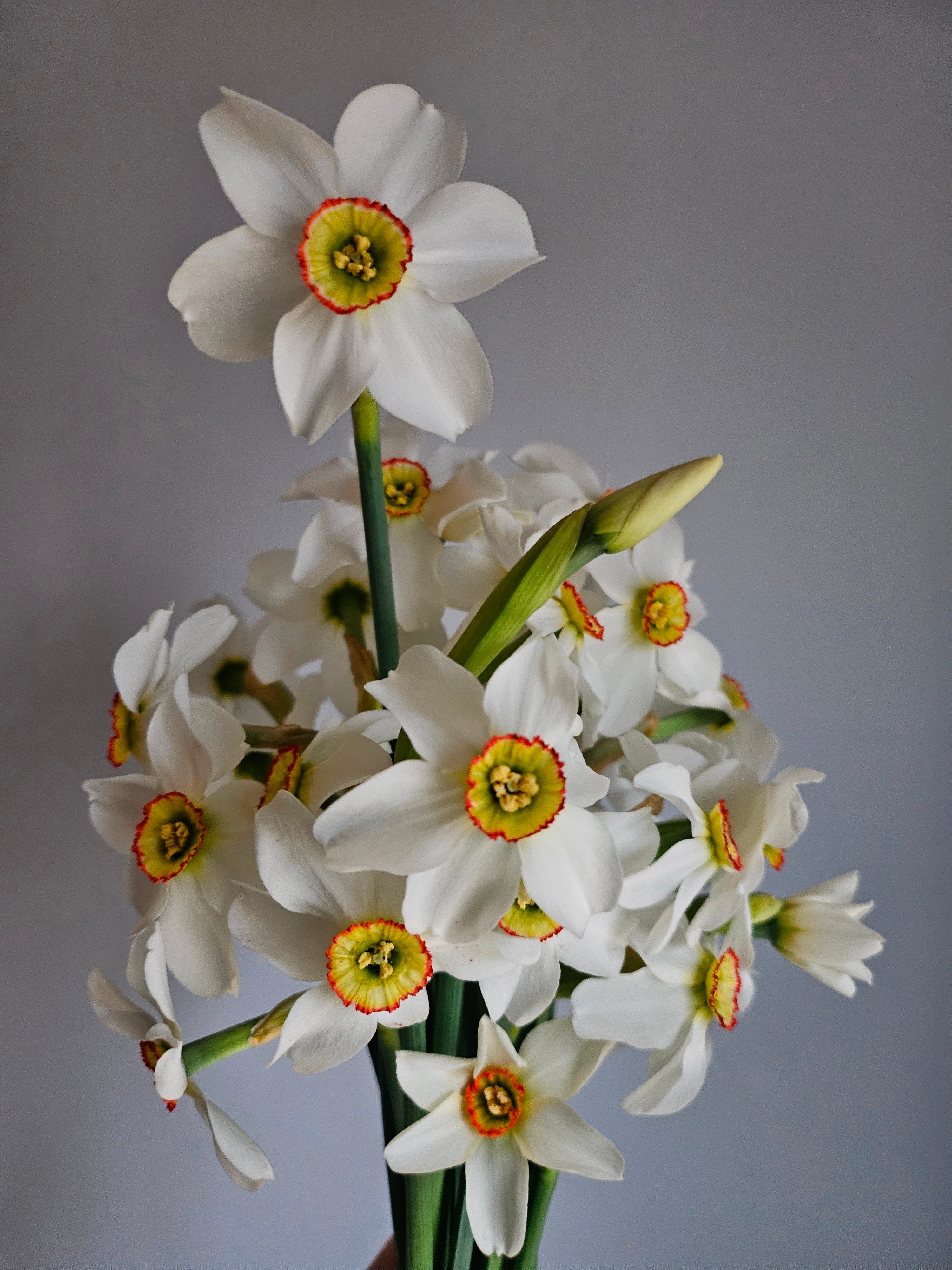
For the next several weeks I harvested every viable daffodil and tulip from the beds and dutifully set them out for sale. I also found ways to improve my setup. I typed up some tips for fresh flower care and set them out for the taking, along with a stack of cards where people could drop their contact information in the lockbox if they wanted to be added to my email list and find out what flowers would be available next. I made a Canva template in an old-fashioned newspaper style that I sent out each Thursday with pictures and a Coming Soon section. Then every Saturday morning I drove right up to the busy road and jammed a big sign into the grass that said FRESH FLOWERS, with our address and the hours they’d be available. I wasn’t making many sales outside of the occasional indulging family member or curious passerby, but I was still having fun.
Until…I wasn’t. For a few reasons:
The weather
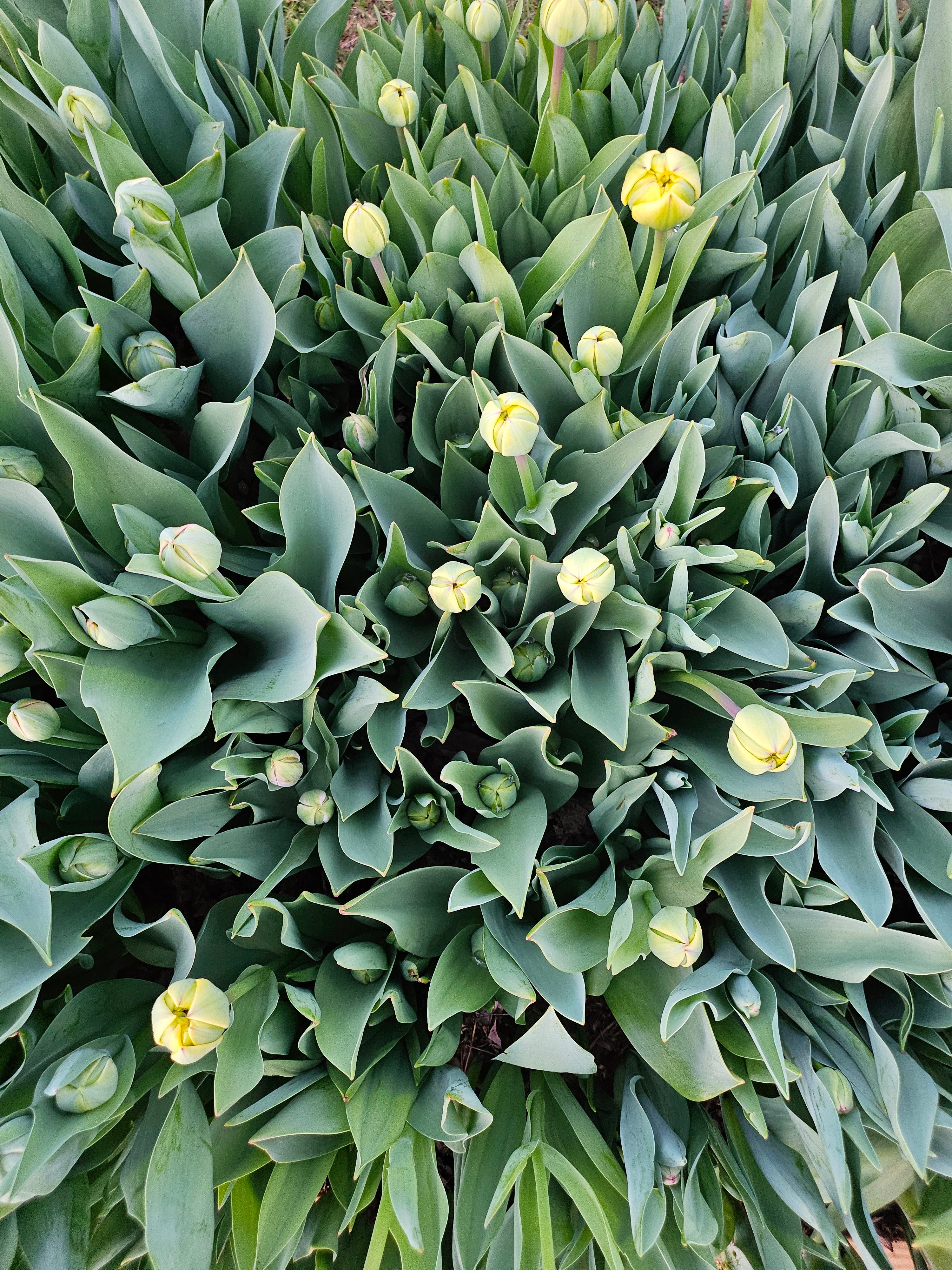
Everyone with a pulse knows that farmers of all stripes are at the mercy of the weather. Even if you have big greenhouses, hoop houses, shade cloth, etc. there’s only so much you can do to control the variables. Needless to say I did not have any of these setups in my backyard. I became obsessed with checking the forecast, especially when the tulips were in bud. Tulips are notorious for ripening quickly and can color up and blow open at the slightest hint of warmth. A tulip that opens on a Wednesday cannot be sold on Saturday, so anytime that happened I took a loss. Tulips are also an expensive flower crop; some of mine ran at 50 cents per bulb for the fancy doubles. I know you’re thinking “Fifty cents!? She’s worked up about fifty cents? That’s nothing!” But these are tulip bulbs. You get one shot with a tulip bulb. Flower farmers don’t grow them as perennials because of the way they’re harvested. A flower seed, on the other hand, costs fractions of a penny in many cases and will often pump out multiple stems over the course of the plant’s life.
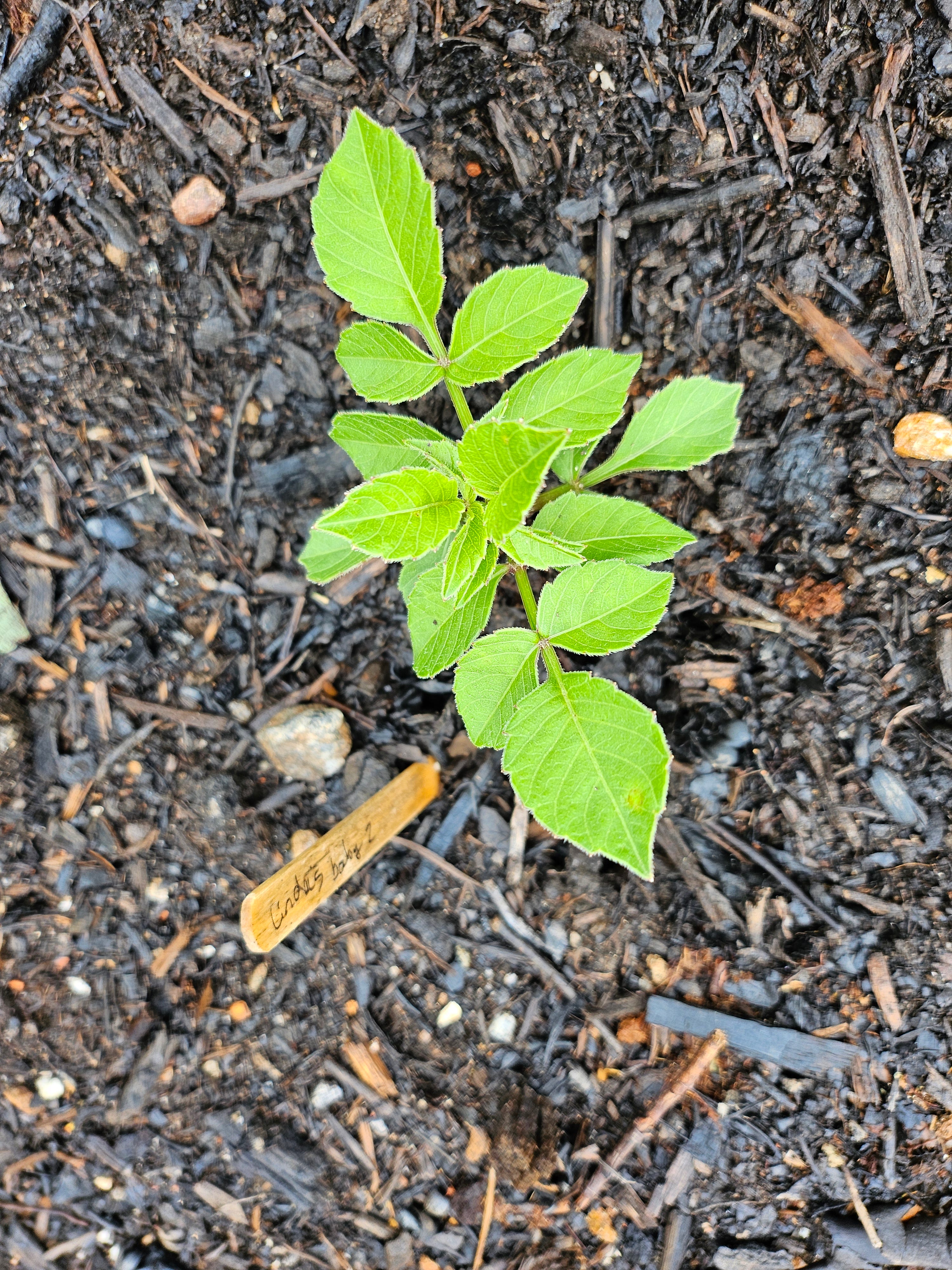
Another issue was that Spring 2025 was one of the longest, wettest, coolest springs I can remember in this area. Ordinarily this would have been a delight! Most years our spring weather lasts just a few weeks and then catapults us into summer. I was taking my children to daycare in fleece jackets because we still had a few mornings in the 50’s well into May. But instead of enjoying this wonderful, surprisingly cool spring I was tearing my hair out because the unusually low temperatures had brought my tender annual successions to a grinding halt. My zinnias took ages to start flowering, and I lost several dahlia tubers to rot because they were so slow to take off.
The volume
I greatly underestimated how many stems I would need each week. I kept careful count of every viable stem that I harvested, making tallies of each variety on a grid paper notepad that I took out into the garden with me, and later combined into a weekly spreadsheet. One core principle of farm stands is “pile it high, watch it fly.” People are drawn to stands that look abundant, overflowing with lush bouquets to choose from. During the tulip weeks I had buckets of bouquets on my table and they looked fabulous, but as we entered proper springtime and the tulips petered out, it looked pretty bare sometimes. On the other hand, I also struggled with…
The waste
I never had a steady stream of customers, which meant loads of flowers went to waste each week. Again, every flower farmer knows that flowers are highly perishable and a huge percentage of your crop is just going to end up on the compost pile, there’s no way to avoid it. Still, I had a hard time coping. Not just because I hated tossing out perfectly good flowers, but because I hated seeing all my effort and time and money discarded so crudely. Yes, I gave away what I could to an assisted living place near our neighborhood, but rolling up with a hundred unsold tulips that have to be put in water and distributed by an already stretched-thin staff didn’t always feel very charitable. It felt more like a nuisance for them, honestly.
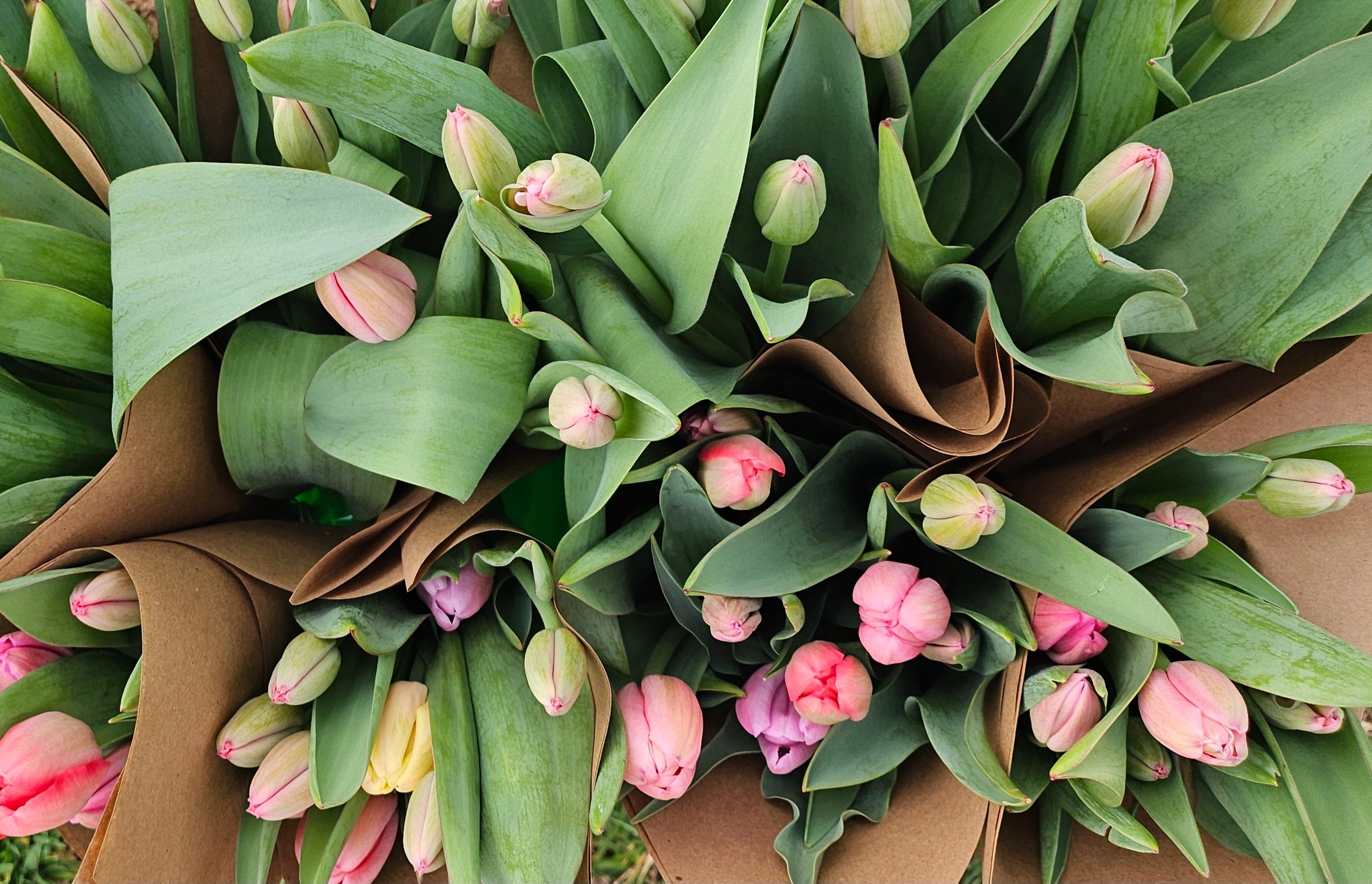
There were other factors that led to the end of the flower stand, like insect pressure (Japanese beetles, thrips, caterpillars), disease (especially on dahlia tubers), money (increasing costs for fertilizer and seeds), but there was one big elephant in the garden that I just could not escape:
The time
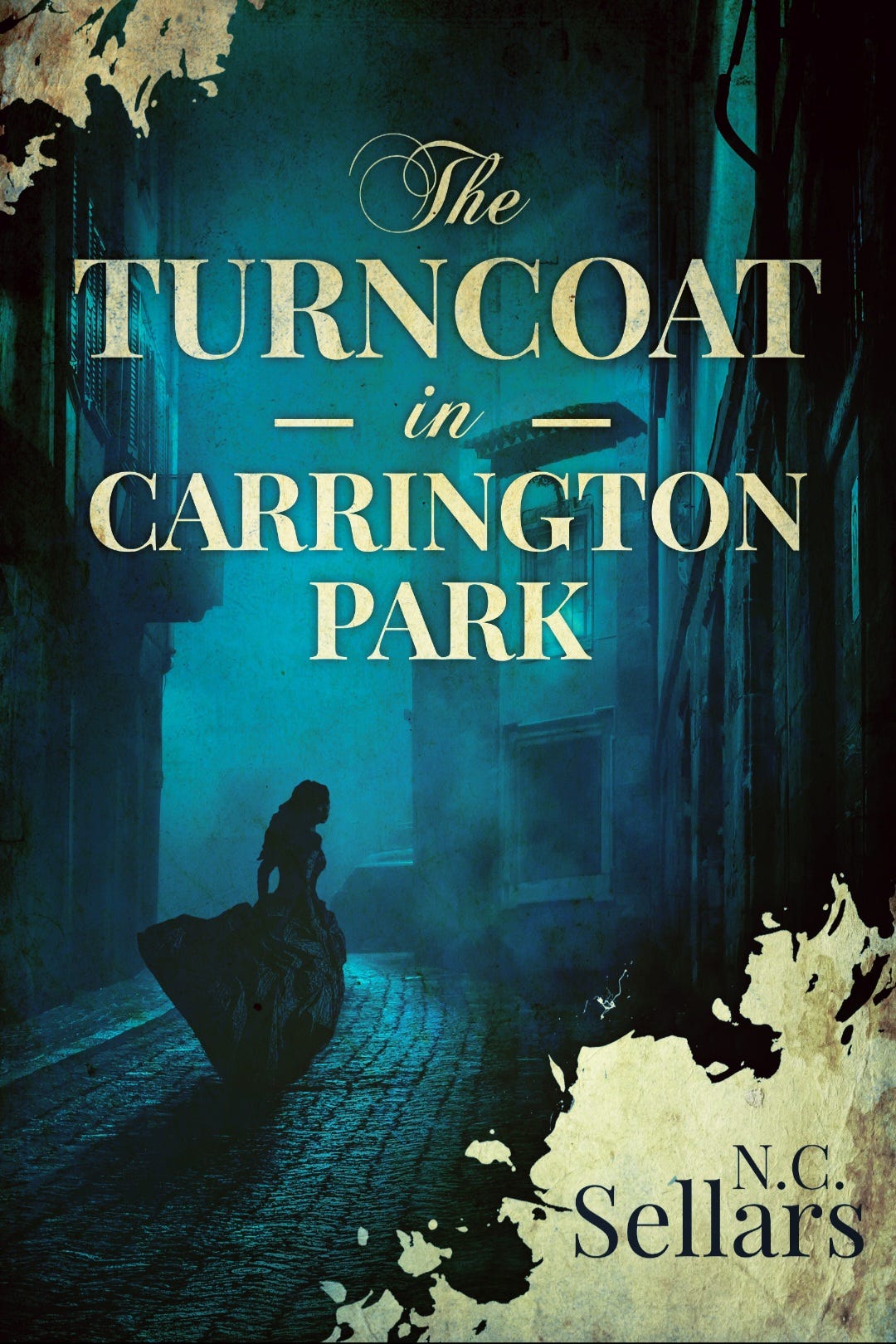
In November 2024 I finished my historical novel The Turncoat in Carrington Park. Set during the American Revolution, it’s the story of Lottie Neall, a girl who takes a job as a harpsichord teacher in a grand Loyalist house during the British occupation, and becomes a spy for the Patriot cause. It took me nearly six years to finish, mostly because of major life events (marriage, babies, career change, etc.) but when I finally wrapped it up I was beyond thrilled. I’ve been writing since 2008, when I first began spending my free time in college scribbling out fairly terrible novels that will never see the light of day. Finishing that book reminded me not only how much I love writing, but finishing a story as well. I wanted to do it again, as soon as possible.
Unfortunately, my schedule for flower farming proved utterly incompatible with writing. As I’ve described in other posts, my best writing happens in a tiny little window between daycare drop-offs and leaving for work (at the last possible minute). We’re talking 45 minutes, maybe an hour if I scarf down breakfast while finishing my hair. Early on I was able to maintain this schedule. But once those little seedlings and bulbs matured into flowers, I found myself having to devote this precious window to harvesting stems.
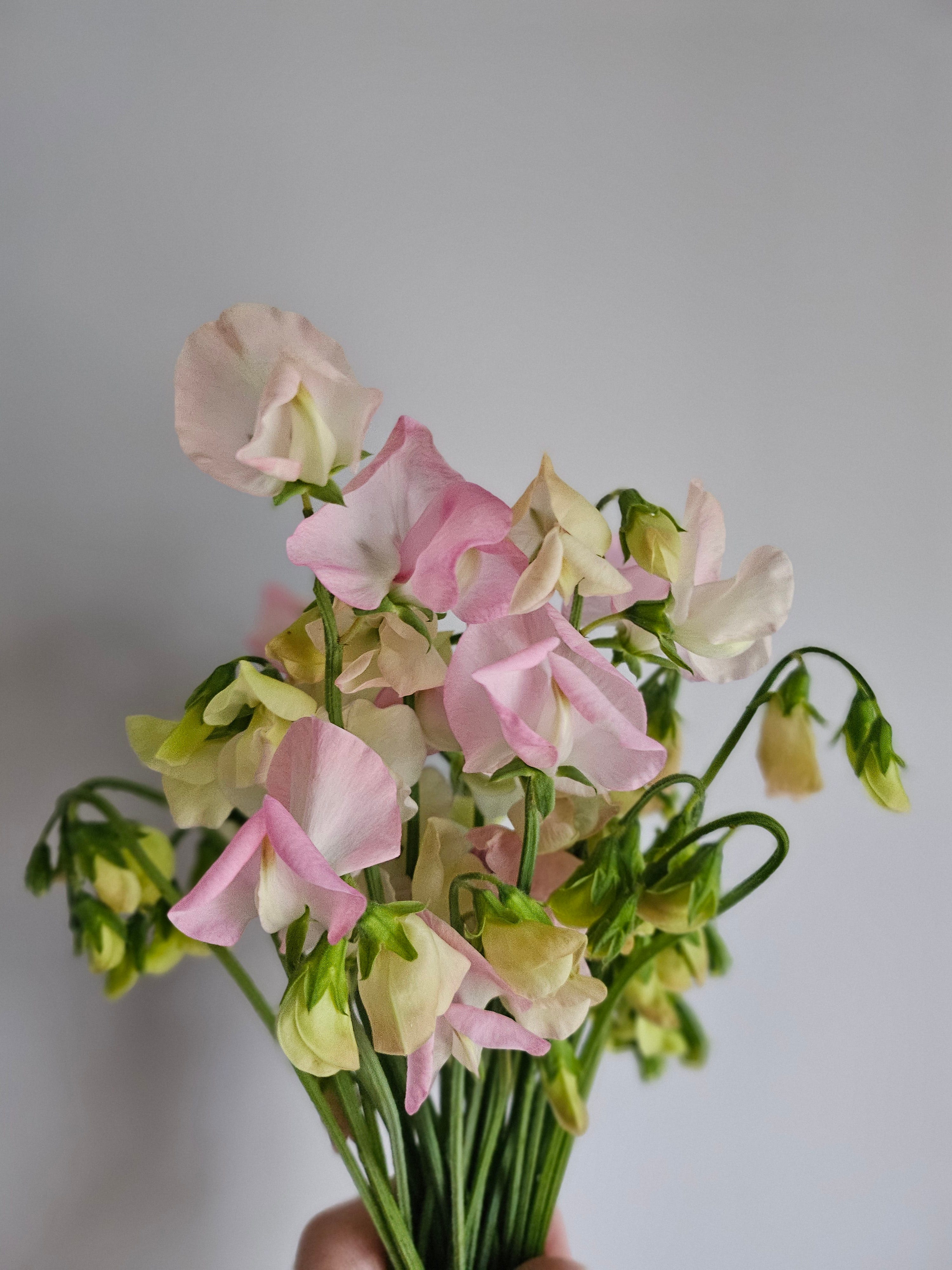
For a few months it was fine. I was still learning my way, after all, and I convinced myself it would get easier in time. But it didn’t, and I grew deeply resentful. It did not help that my sales were so poor. Many mornings I found myself out there, mixing up holding solution and stripping stems and examining petals for flaws, seething with frustration. I wanted to be editing my novel or working on the next one, but instead I was pulling up tulips and cutting sweet peas that I knew no one was going to buy. By some miracle I managed to publish my book, but shortly after I realized I had officially reached an impasse. I’d poured so much cash and time into this venture but it was turning me very bitter, very fast. I had to choose: writing or flower farming.
It was an easy choice. One of the easiest choices I’ve ever made, actually. Writing won, hands down. I hated trying to market my flowers and I was exhausted of all the heartbreak and work yielding absolutely zero results. At least with a book I wasn’t having to start over every single week with fresh product. If it didn’t sell I wasn’t stuck with buckets of books in my garage, destined for the shredder. It was too much pressure and I just couldn’t cope.
Normally I’m loath to quit something I’ve begun, but the moment I decided to shutter the flower stand I felt lighter than I had in months. Years, even, because with the flower farm dream competing with my writing dream for so long I’d been stumbling around in a sort of fog, never quite sure if I should be spending my creative energies in the garden or on the page. Now I have the clarity that only comes with cutting your losses. Yes, I lost money on flowers, but I hadn’t gone into debt for it. I now spend my early morning window exactly where I want to be: typing away on my laptop. Ironically, I use that same grid notepad for tracking. It’s word count now, instead of stems.
I still watch Nicole’s videos from Flower Hill Farm, and I eagerly open every email I get from Erin at Floret. My children love watching our flowers grow and putting together bouquets for us to enjoy. I’m already looking forward to starting summer annuals in another six weeks, only it’ll be three or four trays, not ten.
I have enormous respect for all flower farmers who make a living out of it. I pray you all have perfect temperatures, rich soil, and zero Japanese beetles gnawing on your roses. Thank you for welcoming me into your world, as brief as my stay may have been. You taught me how to find joy and wonder in my work, and the importance of discipline and showing up no matter the weather. Most importantly, you taught me the true meaning of a fond (and beautiful) farewell.