

Octavia Hall: Prologue
October 1779

Silas
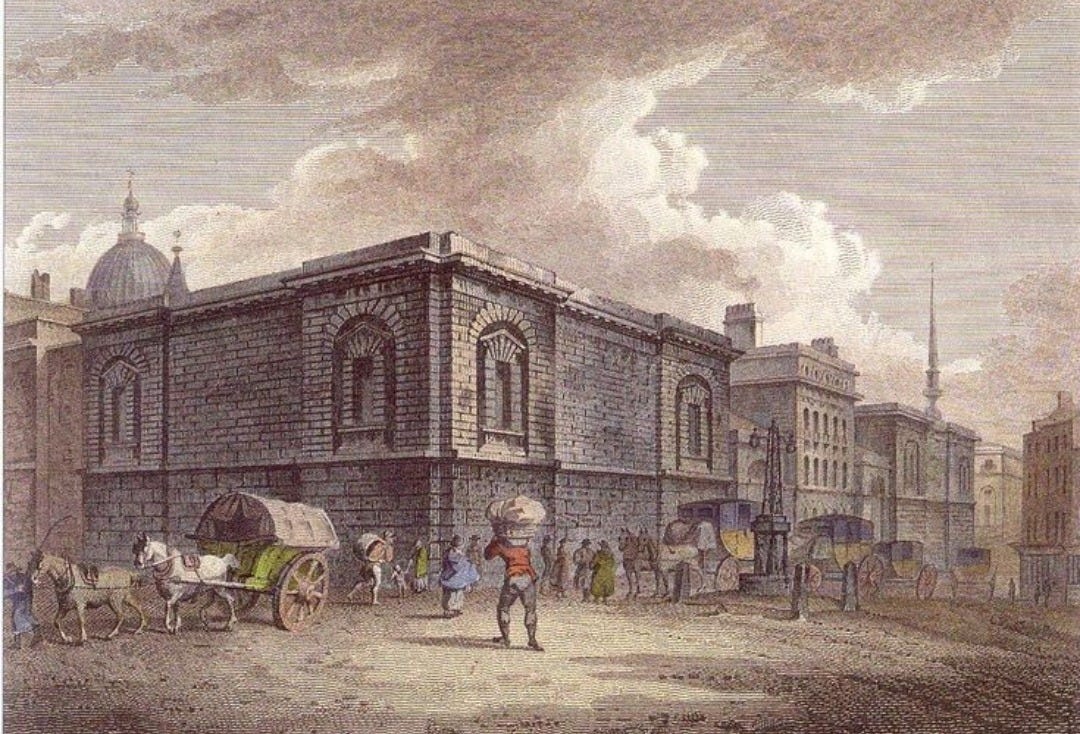
“Your father is here to collect you, Mr. Underhill.”
I peel myself from the bench. Careful to avoid the beggars and drunks sprawled on the grimy, squalid floor like flotsam from a shipwreck, I pick my way across the cell. The door opens with a vile screech of its hinges that sets my teeth on edge. The light from the guard’s torch warms my face as he motions for me to follow him down the dim corridor. The stone is cold and harsh against my bare feet, and I accidentally step in a murky puddle of what I can only pray is water.
The guard stops before another door; this one is smaller, without any barred cutouts in the wood to release the stench of filthy prisoners kept within. He knocks once and I follow him into a tidy, comfortable room with a low fire glowing in the hearth. In the center stands a table with four people seated around it: my mother and father, a soldier I don’t recognize, and Jacob Parker. Parker’s still in his army uniform; he’s so pleased with how he looks in that red coat that he probably keeps it on when he makes love to those sluts he meets at The Ivory Hare.
“Thought you’d pay me a visit?” I say to Parker, ignoring my parents and the stranger. It’s his fault I’m here, after all. He had to act the utter child and have me arrested for theft simply because I owed him a few measly pounds. Pounds he never should’ve won. He kept refilling my glass even though he knew I’d just learned of Edward’s death and was in no fit state to gamble. He knew how dear our friendship was, and how deeply the news had wounded me. He never should’ve encouraged me to wager so much money on a hand of whist.
I gesture to my state of undress; when I arrived at the jail the warden took one look at the fine stitching on my coat and whisked it away—along with my waistcoat, shoes, and stockings. “I hope you’re pleased with your handiwork, Parker.”
“Lieutenant Parker, if you don’t mind,” he replies. His mouth twists into that small, baiting smile that appears on his face whenever he’s about to win a trick. He turns to my father. “Thank you for resolving this matter, sir. I know you disapprove of gaming.”
“I disapprove of folly,” retorts Father, in his guttural growl. If he ever had the crisp, elegant diction expected of a peer it vanished years ago, eroded by decades of shouting at every footman and errand boy unfortunate enough to cross his path. “If my fool of a son is short-sighted enough to wager sixty pounds on a fistful of cards, I’d trust he could pay the bill himself. My assumptions were misguided. A pity.”
Father holds out a slim packet of banknotes. In the dim firelight his joints look redder and more swollen than last week. Either the cold weather has irritated his rheumatics or some crank doctor persuaded my mother to administer a new tincture to his knuckles twice daily and it isn’t working. My guess is the latter.
Parker accepts the money with a gracious bow. “Thank you, Mr. Underhill. I do not mean to put you in an awkward situation. You know of my father’s financial troubles. Scraping together enough to pay for my commission cost him nearly everything he had. While sixty pounds may not seem like a great fortune to a man of your position…”
“Think nothing of it,” says Father, waving his hand. “For all the years you boys have known each other, there should’ve been no question that my son would settle his debts. I only pray he used his time here to search himself for clarity and purpose.”
“In only three days?” Parker taunts. “I’d think a fellow like Silas would require three months, at the least.”
Instead of defending me, Father lets out a laugh that sounds like a bullfrog’s croak while Mother just sits there in pinched silence, staring at the tabletop. “We shall see,” says Father. “Best of luck on your return to America, Lieutenant Parker. Please give my regards to your mother and father.”
“I will, sir.”
Parker bows again and marches from the room. The other soldier, who hasn’t spoken a word since I entered, begins spreading papers over the table.
Father harrumphs at me. “Are you satisfied now?”
“About what?” I say rudely.
“Watching me hand over a small fortune to George Parker’s son. You know as well as I do that every man in that family is a depraved upstart.”
“I thought you liked Parker’s father.”
“As a merchant,” he spits out. “Not a local politician trying to worm his way into Parliament. When word of your indiscretion gets out it will only strengthen his campaign. The common, hardworking man’s soldier son swindled by the peer’s cruel spawn. The pamphlets nearly write themselves.”
I scratch the cluster of fleabites on my ribs. “What does it matter? You’re a squire, a member of the landed gentry. George Parker is no threat to you. May I sit?”
“You may not.” He narrows his watery eyes. “George Parker alone is no threat, you are correct on that score. But ten George Parkers—or twenty, or fifty—that is a very real threat. One that you ought to take seriously if you don’t wish to see every penny of your inheritance swallowed up by taxes to fund the American war.”
“Last I heard you supported the war,” I say dryly.
“I do. But I also recognize it’s been dragging on for nearly five wretched years. Since it seems we are no closer to a resolution with the rebel leadership, Parliament has decided to alter its strategy. The bulk of the army will leave its posts in New York and elsewhere in New England, and sail south. They have been reassured that thousands of Loyalists in South Carolina are prepared to take up arms and fight alongside them.”
“I thought Charleston was vehemently patriotic.”
He snorts. “Ah. So you do know how to read a newspaper. Charleston is but one city. A difficult obstacle, yes, but once the fleet establishes a blockade the colony will essentially find itself with a python around its neck. The difficulty, however, is that recruitment numbers are staggeringly low. That’s why Parliament has given the military new powers in this realm.”
I say nothing. I’ve heard of the Press Act, of course. A few months ago a recruiter took it upon himself to set up shop in a string of taverns in Scotland and persuaded every drunk in the place to sign his life away to the Royal Navy before he had a chance to sober up. It was seen as questionable—possibly cruel—at the time, but it seems sentiments have changed since then. “What does the Press Act have to do with me?”
“Given you just spent the last three nights in jail,” says Father sharply, “you may find it has a great deal to do with you.”
I laugh in disbelief. “Are you saying you’re about to ship me off to America just because Parker couldn’t be bothered to wait for a handful of pounds? I doubt any reasonable judge will support your proposal, considering you just paid the debt yourself in front of a roomful of witnesses. Kindly tell me whose debt I still carry.”
“Mine.”
He says it quietly, but he manages to pour so much contempt and menace into the word that for the first time, I falter.
“You cannot mean…” I stammer. “It’s sixty pounds, Father. Would you truly see me sent to my death for what amounts to pennies in your pocket? If my only options are sailing off to fight in the colonies or spending the next six months in that jail cell, I’d much prefer to stay here.”
“You are a debtor, Silas. You do not have the luxury of options. If you can repay me now, we will consider the matter closed. Do you have the money?”
He knows I don’t. I resist the urge to scratch the fleabites again and look down at my bare feet.
“I thought not. Now, Major Cook is here from the Saint George Volunteers,” he says, gesturing to the recruiter. I’d have thought a soldier might show some discomfort at playing witness to private family matters, but he doesn’t seem bothered in the least. “He has kindly brought the enlistment documents with him—”
I round on Mother. “You won’t let this happen, surely?”
She says nothing, but the corners of her eyes grow wet.
“You heard about Edward Rilston. I know his mother spoke to you. Twenty-six years old and dead less than three weeks after his ship landed in Jamaica. You know he was my oldest friend. I am your son, ma’am. You cannot want that fate for me.”
I wait for her to argue back, or weep, but she just turns her head slightly away, as if she can’t bear to listen to my pleas. Father, too, refuses to meet my eyes. His stiff fingers close around the pen and with a few quick scratches he signs the enlistment papers. A hollow, banging sound echoes in my ears and I grip the back of Parker’s empty chair. If there was even a crumb of food in my stomach I’d be vomiting it up right now.
Somewhere outside my nausea, Father and Major Cook are still talking about my assignment.
“…the grenadiers, I think,” says the major. “Those are picked troops, typically seasoned fighters, but once the colonel sees your son’s height I doubt he’ll object,” he adds with approval.
“If you think it best,” says Father, signing a second sheet. “I’d be pleased to see him begin as a corporal. Pending your approval, of course. You’ll find he’s physically fit and literate. I’ll pay for his uniform, along with any fees you personally require for taking the trouble to come here today.”
Major Cook nods, his bland face brightening at the promise of a bribe. My nausea vanishes and the world around me turns sharp and clear once more, as though my head has broken through the surface of a lake. “Corporal? Is that a joke?”
Father doesn’t look up from his papers. “Not in the slightest.”
“But…” My face burns. Corporal Underhill. It’s the most humiliating thing I’ve ever heard. “If you’re going to force me into the army I’d have thought you’d want an officer’s commission for me.”
“A fine waste of money that would be,” he says, laughing. “I’d see a greater return investing in a chimera farm than in your military career.”
Major Cook stifles a laugh and my gut seizes up with anger. As an officer I’d at least be promised adequate pay and occasions for merriment. As a member of rank I’ll be little better than a slave, forced to do the most difficult labor while other men collect all the glory. It’s as bad as an apprenticeship. “Forgive my surprise, Father,” I say, attempting to sound calm and not like I’m about to ignite with rage. “I do not mean any disrespect. On the contrary, I am only thinking of our family’s honor. Surely a gentleman can understand that.”
Father finally lifts his head. He gives me a long, piercing look, as though he can see my true thoughts printed before his eyes as clearly as words on a page, and finds them as pathetic and shallow as a street whore’s promises of love. “I understand it very well,” he says in a low, threatening voice. “More than anything, I understand that your inability to make any meaningful contribution to society is a blight on the family’s honor, and I am willing to take whatever steps are necessary to rectify that. Including sponsoring your service in America.”
He signs the final paper with a flourish and gestures for the recruiter to collect the bundle. Fury swells in my belly until it feels like I’ve swallowed a paving stone. This man calls himself my father, yet signs my death warrant? They burned Edward’s body on the beach because they were so afraid the disease would spread. Everyone’s heard the story; I know Father has as well. “If I’m sent to South Carolina, I’m more likely to return in a coffin than standing on my own feet,” I say, my throat suddenly tight.
“Better a son who dies in service to his King than a wastrel rotting in jail,” he says mildly. “Wouldn’t you agree?”
The tightness thickens. I feel an uncomfortable, distinct pricking in my eyes. Ignoring it, I stare very hard at the smooth white hairs of Father’s wig. “Yes sir.”
He pushes back his chair and I somehow manage to stand up straight. He looks me up and down, his face impassive, then tucks his hat under his arm. When he reaches the door he turns back to me. “I will write to Lieutenant Colonel Granger. If you manage to distinguish yourself in the colonies, I will secure a lieutenancy for you.”
Distinguish myself. Already I feel crushed beneath the weight of such a charge. “And if I fail, sir?”
He holds his hand out to my mother, who follows him from the little room without even glancing at me. The lamplight from the dank corridor casts a glow around my father, so that he looks like some sort of god sent to free all the prisoners. “Then you’d better make yourself a home in America,” he says steadily, his voice echoing on the stone, “for you won’t be welcome back in England.”
If you want to read The Turncoat in Carrington Park, the first installment in this series, it is available on Amazon in both paperback and ebook :)